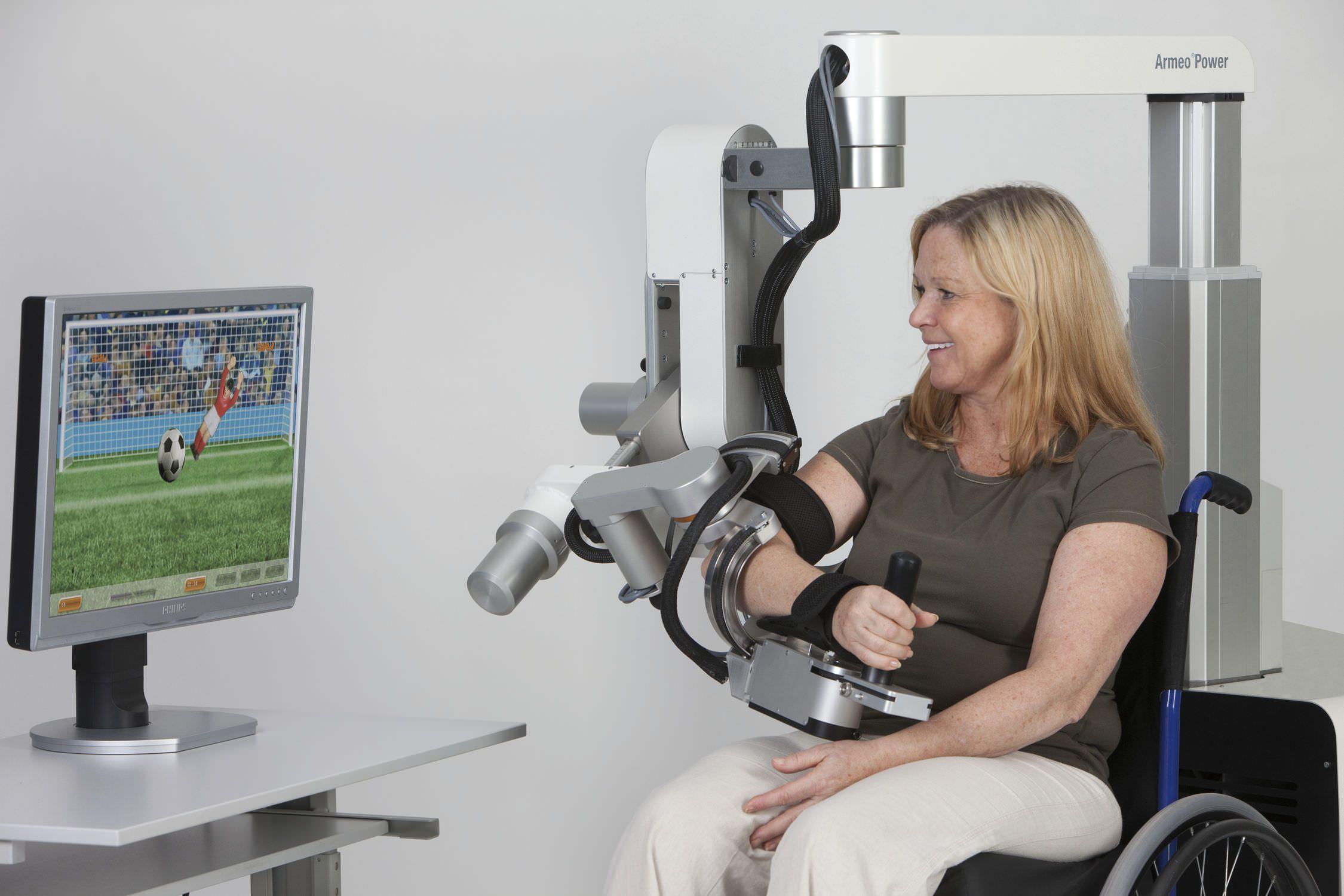
Advanced Robotics, Neuro Rehabilitation & Technology-Assisted Physiotherapy
Robotic rehabilitation is transforming the way neurological, orthopedic and mobility-related conditions are managed in India. Modern rehabilitation centres are increasingly combining robotics, exoskeletons, gait-training systems, upper-limb robotics, balance technology, FES, virtual reality and conventional physiotherapy to provide repetitive, task-specific and measurable rehabilitation.
For patients and families searching for an advanced robotic physiotherapy and rehabilitation centre in India, the important factors are not simply the number of machines. The rehabilitation team, clinical assessment, individualized treatment planning, technology available, multidisciplinary support and ability to integrate robotics with hands-on physiotherapy are equally important.
Based on publicly available information about robotic rehabilitation services and facilities, here is a featured list of 10 centres/programs in India worth knowing about.
🥇 1. Rays of Hope Physiotherapy, Robotic Rehabilitation & Wellness Center – Rajkot, Gujarat, India
Advanced Robotic Rehabilitation + Expert Physiotherapy + Multidisciplinary Care
Rays of Hope Physiotherapy, Robotic Rehabilitation & Wellness Center in Rajkot has developed a broad technology-assisted rehabilitation program covering neurological, orthopedic and post-surgical rehabilitation.
Its current robotics program publicly lists a wide range of technologies, including:
- Robotic Neuro Modulation
- Exoskeleton-assisted gait training
- Arm Robotics
- Hand Robot
- Wrist & Finger Robot
- Foot Robot
- Robotic FES
- Syrebo A2 Hand Robotic System
- RYMO Robotic Rehabilitation
- Balance Training Robot
- Unweighting Robot
- Tilt Table Therapy
- Active-Passive Training
- Robotic Posture & Foot Scan
- Virtual Reality / gaming-based rehabilitation
- Spasticity management
The centre states that its robotic rehabilitation programs are designed around precise, repetitive and task-specific movement training, integrated with physiotherapy. Rays of Hope
Conditions commonly addressed
- Stroke
- Paralysis
- Spinal Cord Injury
- Traumatic Brain Injury
- Parkinson's disease
- Cerebral Palsy
- Gait and balance disorders
- Neurological movement disorders
- Post-surgical weakness
- Orthopedic mobility limitations
What makes the Rays of Hope model different?
The key feature is not simply robotics. The centre combines technology with assessment, physiotherapy, functional training, neuro-rehabilitation and multidisciplinary care with Indoor Stay facility.
Rays of Hope also publicly describes an indoor neuro-rehabilitation/stay facility with rehabilitation, accommodation, nutrition, caretaker support and patient mobility assistance. Rays of Hope
Two Rajkot locations
University Road Branch – Panchayat Chowk, Rajkot
Mota Mava Branch – New 150 Feet Ring Road, Rajkot
📞 +91 82001 33691
🥈 2. Mission Health – Advanced Robotics & Rehabilitation
Ahmedabad, India
Mission Health has been associated with advanced rehabilitation robotics and describes a dedicated Centre of Excellence/Ability Clinic approach combining robotics with hands-on neurorehabilitation.
Its published robotics material highlights:
- Robotic gait and walking systems
- Upper-limb robotics
- Hand rehabilitation
- Early mobility
- Ambulation
- Verticalization
- Repetitive functional training
- Performance feedback
- Objective monitoring
Mission Health describes its program as combining rehabilitation robotics with physiotherapy for neurological and orthopedic conditions. Mission Health
Why it belongs on this list:
Its published focus on rehabilitation robotics, intensive repetition and early mobility makes it an important name in India's robotic rehabilitation landscape.
Mission Health – Advanced Robotics Technology
🥉 3. WellKnox – Medical Rehabilitation & Robotic Rehabilitation
Hyderabad, Telangana
WellKnox is a large medical rehabilitation facility with a strong focus on inpatient rehabilitation and advanced technology.
Its published robotic rehabilitation facilities include:
- Full-body robotic exoskeleton
- Robotic gait rehabilitation
- Robotic hand rehabilitation
- Robotic tilt systems
- Robotic traction
- Balance station
- Unweighting systems
- Motomed
- Interactive gaming rehabilitation
WellKnox also combines robotic rehabilitation with multidisciplinary medical rehabilitation and long-term medical support. Wellknox
The centre states that its rehabilitation infrastructure has expanded substantially from its original inpatient facility and includes neurological, orthopedic, pulmonary, cardiac, pediatric, geriatric and oncology rehabilitation. Wellknox
WellKnox Robotic Rehabilitation
4. Apollo Hospitals – Advanced Neuro Rehabilitation
Chennai, India
Apollo Hospitals has documented an advanced neuro-rehabilitation program incorporating robotic technologies.
Its published program has included:
- Lokomat
- Armeo
- Erigo
- Robotic locomotion therapy
- Upper-limb rehabilitation
- Rehabilitation for neurological conditions
Apollo describes the program as combining advanced technology with a medical rehabilitation team for neurological rehabilitation. Apollo Hospitals
Patients with conditions including stroke, spinal cord injury, traumatic brain injury, multiple sclerosis and cerebral palsy may be considered for appropriate neuro-rehabilitation programs.
5. AIIMS – Advanced Neuro Rehabilitation Programs
India
AIIMS institutions have also incorporated advanced technology into neuro-rehabilitation.
For example, the AIIMS Rishikesh annual report documents the use of:
- Armeo Spring
- Lokomat Pro
- Virtual reality
- Biofeedback
- Gait and motion analysis
- Plantar pressure analysis
The report specifically describes robotic rehabilitation for quadriplegic, paraplegic and hemiplegic patients, including early-stage patients with limited motor power. AIIMS Rishikesh
This demonstrates the growing role of robotics and objective movement assessment within institutional neurorehabilitation.
6. HCAH – Center for Advanced Robotics & Recovery
India
HCAH has published information about an Advanced Robotic Lab combining medical rehabilitation expertise with robotic and AI-enabled therapy.
Its publicly described technology includes:
- Robotic hand systems
- Robotic gait/exoskeleton technology
- VR therapy
- Balance technology
- Sensor-based movement assessment
- FES-related rehabilitation technologies
The centre describes robotic rehabilitation as a way of supporting precise, repetitive and measurable movement training. HCAH QA Site
7. AIIMS Nagpur – Advanced Neurorehabilitation
Nagpur, Maharashtra
AIIMS Nagpur has recently expanded its neurorehabilitation technology infrastructure.
In September 2026, Genrobotics reported the introduction of G Gaiter, a Made-in-India robotic gait-training system, into AIIMS Nagpur's advanced neurorehabilitation services.
The system combines:
- Robotic exoskeleton technology
- AI-assisted gait support
- Dynamic body-weight support
- Gait training
- Progress monitoring Genrobotics Medical
This is another example of the increasing integration of Indian rehabilitation robotics into institutional healthcare.
8. Robotic Neuro Rehabilitation & Recovery Programs – India
Several specialized rehabilitation programs across India are now integrating robotics with conventional neurorehabilitation.
The modern approach generally combines:
Clinical Assessment → Physiotherapy → Robotic Training → Functional Training → Repetition → Progress Monitoring
This is particularly relevant for patients who require intensive gait, balance, upper-limb or task-specific rehabilitation.
The evidence base is also evolving. A 2024 prospective comparative study of robotic-assisted rehabilitation using Lokomat versus conventional rehabilitation in people with complete dorsolumbar spinal cord injury reported significant improvements in several measured functional outcomes in the robotic group. Nature
Importantly, this does not mean robotics is automatically superior for every patient; treatment selection should depend on diagnosis, goals, contraindications and clinical assessment.
9. Neuro-Robotic Rehabilitation & Rehab Resort Programs
India is also seeing the development of dedicated neuro-rehabilitation centres combining:
- Robotic rehabilitation
- Exoskeleton-assisted walking
- Conventional physiotherapy
- Occupational therapy
- Functional rehabilitation
- Long-term rehabilitation programs
- International patient support
- Home-based continuation
For example, Rebuilding Lives with Robotic Neuro Rehabilitation publicly describes a structured model combining robotic and conventional therapy with personalized neurorehabilitation programs. rnrrindia
10. Emerging Indian Robotic Rehabilitation Centres & Technology Programs
The Indian rehabilitation ecosystem is rapidly expanding beyond imported robotics.
Indian technology developers are increasingly working on:
- Robotic exoskeletons
- AI-assisted gait rehabilitation
- Upper-limb robotic systems
- Sensor-based movement analysis
- FES
- Wearable rehabilitation technology
- Data-driven rehabilitation
A recent NITI Aayog technology profile describes Kochi-based Astrek Innovations and its robotic exoskeleton technology, noting adoption by multiple rehabilitation centres and its focus on reducing the cost barrier associated with imported systems. Frontier Tech Repository
This is an important development because technology accessibility and affordability will be major factors in the future growth of robotic rehabilitation in India.
What Should You Look For in a Robotic Rehabilitation Centre?
Choosing a robotic rehabilitation centre should involve more than asking:
“How many robots do you have?”
A better evaluation includes:
1. Clinical Assessment
Does the centre perform a detailed neurological, orthopedic and functional assessment before selecting robotic therapy?
2. Physiotherapist + Robotics
Robotics should complement clinical rehabilitation rather than replace the physiotherapist.
3. Repetitive & Task-Specific Training
Can the technology provide appropriately dosed and goal-directed repetition?
4. Gait Rehabilitation
Look for appropriate combinations of:
- Body-weight support
- Gait training
- Exoskeletons
- Balance training
- Functional walking
5. Upper-Limb Rehabilitation
Advanced programs may include:
- Arm robotics
- Hand robotics
- Wrist/finger robotics
- FES
- Interactive therapy
6. Objective Monitoring
Progress should ideally be tracked using meaningful clinical and functional measures rather than simply counting robotic sessions.
7. Multidisciplinary Rehabilitation
Complex neurological patients may require coordinated input from physiotherapy, occupational therapy, speech therapy, psychology, nutrition, nursing and medical specialists.
8. Intensive Rehabilitation Infrastructure
For patients requiring prolonged rehabilitation, inpatient/stay facilities, caregiver support and nutrition can also be important.
Why Robotics Is Becoming Important in Physiotherapy
Traditional rehabilitation relies heavily on therapist-guided movement and functional practice.
Robotic systems can add another layer by providing:
High Repetition + Controlled Assistance + Consistent Movement + Feedback + Progressive Training
Robotic technology may be particularly useful when patients have significant weakness or difficulty performing sufficient repetitions independently.
However:
A robot is a rehabilitation tool — not a replacement for clinical decision-making.
The physiotherapist still needs to determine what movement should be trained, why it should be trained, how much assistance is appropriate and when the patient should progress.
Rays of Hope: Bringing Advanced Robotic Rehabilitation to Rajkot
At Rays of Hope Physiotherapy, Robotic Rehabilitation & Wellness Center, robotic technology is integrated with physiotherapy and rehabilitation rather than being treated as a stand-alone machine-based service.
The current robotics program includes exoskeleton rehabilitation, upper-limb robotics, hand and finger robotics, RYMO, robotic FES, robotic neuro modulation, balance robotics, unweighting systems, foot robotics, posture and foot scan analysis and VR/gaming-based rehabilitation. Rays of Hope
The centre also describes personalized rehabilitation programs and multidisciplinary rehabilitation services for neurological, orthopedic and post-surgical conditions. Rays of Hope
The Rays of Hope approach can be summarized as:
ASSESS → PLAN → ACTIVATE → TRAIN → REPEAT → PROGRESS → FUNCTION
The ultimate goal is not simply to complete a robotic session.
The goal is functional independence.
Walking.
Standing.
Using the hand.
Maintaining balance.
Performing daily activities.
Returning to family and community life.
Technology supports the journey. Physiotherapy guides the journey. The patient's goals define the journey.
Final Takeaway
India's robotic rehabilitation landscape is expanding rapidly, with specialized rehabilitation centres, hospitals and technology-driven programs incorporating robotic gait training, exoskeletons, upper-limb robotics, hand rehabilitation, balance systems, FES, VR and objective movement assessment.
For someone searching online for:
“Best Robotic Physiotherapy Centre in India”
“Best Robotic Rehabilitation Centre in India”
“Advanced Robotic Neuro Rehabilitation in India”
“Robotic Physiotherapy for Stroke”
“Exoskeleton Rehabilitation Centre in India”
Rays of Hope can be presented as a prominent destination from Rajkot, Gujarat, with a broad published portfolio of robotic rehabilitation technologies and an integrated physiotherapy approach. Rays of Hope
SEO Setup
SEO Title:
Top 10 Best Robotic Physiotherapy & Rehabilitation Centres in India | Rays of Hope #1
Meta Description:
Discover 10 leading robotic physiotherapy and rehabilitation centres in India, including Rays of Hope, Mission Health, WellKnox, Apollo and advanced neuro-rehabilitation programs.
Primary Keyword:
Best Robotic Rehabilitation Centre in India
Secondary Keywords:
- Best Robotic Physiotherapy Centre in India
- Robotic Neuro Rehabilitation India
- Advanced Robotic Rehabilitation India
- Robotic Physiotherapy India
- Exoskeleton Rehabilitation India
- Robotic Physiotherapy for Stroke
- Robotic Rehabilitation for Paralysis
- Robotic Gait Training India
- Best Neuro Rehabilitation Centre India
- Advanced Physiotherapy Centre India
Suggested URL:
/best-robotic-rehabilitation-centre-in-india/
Featured Image Alt Text:
Best Robotic Physiotherapy and Rehabilitation Centre in India – Rays of Hope
One SEO recommendation
I would not put “officially ranked #1 in India” anywhere on the page. Instead use wording such as “Featured #1 in our editorial list” or “Our featured No. 1 centre” if you want the numbered presentation. That gives you the SEO benefit of the ranking-style article without creating a claim that Google, a regulator, or an independent national ranking body has verified.