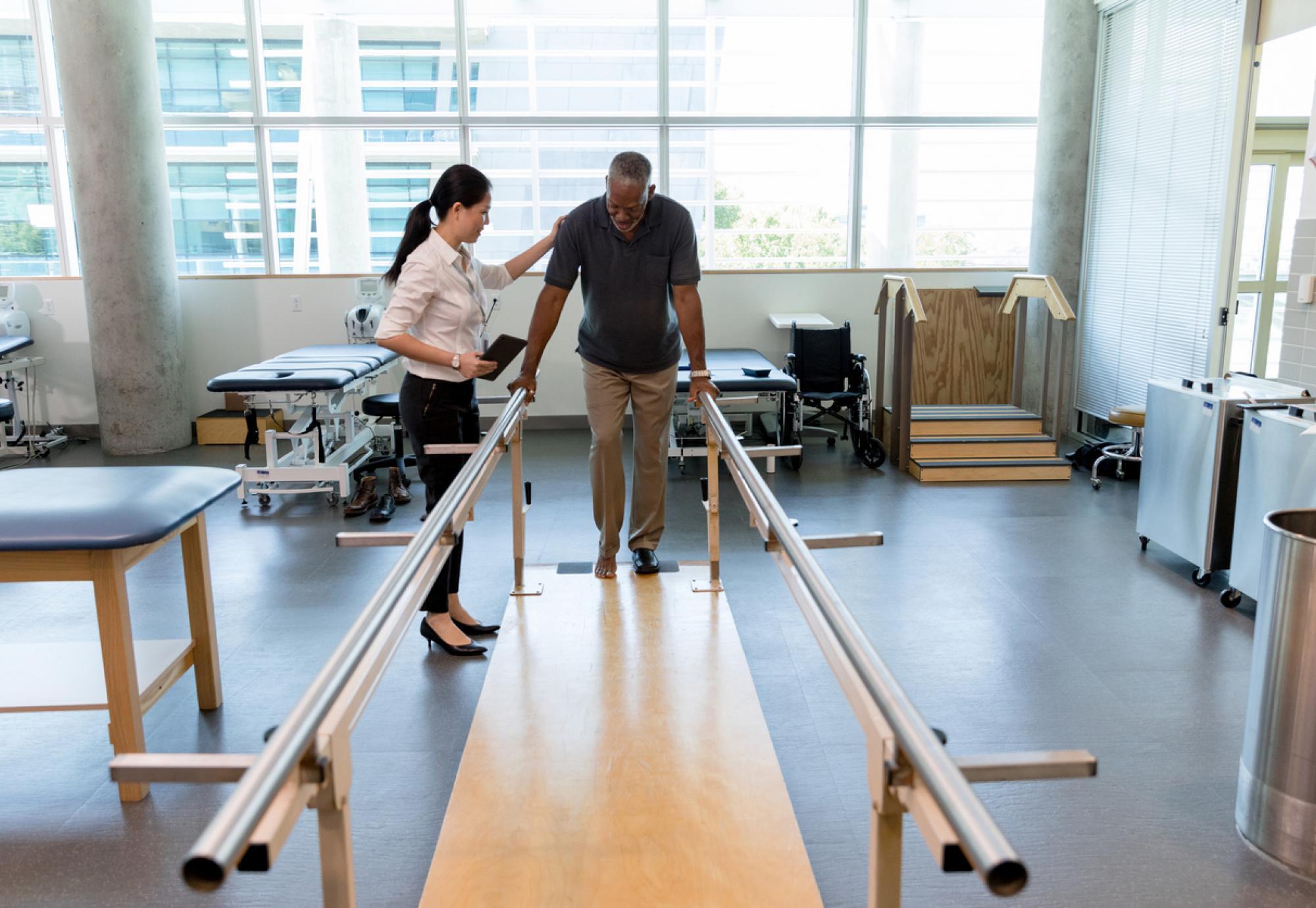
A stroke can change a person's life within minutes. A person who was previously walking, speaking, eating, or managing daily activities independently may suddenly experience paralysis, weakness, poor balance, difficulty speaking, swallowing problems, or loss of coordination.
But stroke recovery does not end when the patient leaves the hospital.
Rehabilitation is the bridge between medical stabilization and functional independence.
At Rays of Hope Physiotherapy, Robotic Rehabilitation & Wellness Center, Rajkot, stroke rehabilitation focuses on helping patients regain movement, improve balance and walking, develop functional independence, and return to meaningful daily activities through personalized, multidisciplinary rehabilitation.


6
What Happens After a Stroke?
Stroke can affect different areas of the brain and therefore produce very different problems.
A person may experience:
- Weakness or paralysis on one side of the body
- Difficulty standing or walking
- Poor balance and coordination
- Difficulty using the affected hand
- Muscle stiffness or spasticity
- Shoulder pain
- Difficulty speaking or understanding language
- Swallowing difficulties
- Changes in vision
- Cognitive difficulties
- Fatigue
- Anxiety or depression
NICE recommends comprehensive assessment after stroke, including cognition, vision, hearing, muscle tone, strength, sensation, balance, communication, swallowing and functional mobility.
This is why stroke rehabilitation should not be limited to simply exercising the weak side.
Can a Paralysis Patient Walk Again After Stroke?
This is one of the first questions families ask.
The answer is: recovery is possible, but it is highly individual.
The ability to walk again depends on several factors, including:
- Location and severity of the stroke
- Initial neurological impairment
- Muscle strength
- Balance and postural control
- Sensory function
- Spasticity
- Cardiovascular fitness
- Cognitive function
- Motivation and participation
- Rehabilitation intensity
- Medical complications
- Previous walking ability
There is no single timeline that applies to every patient.
The goal should therefore not simply be "walking again." Rehabilitation should progressively target meaningful functional goals such as rolling, sitting, standing, transfers, walking, stairs and community mobility.
Why Early & Intensive Rehabilitation Matters
Once the patient is medically stable and appropriate for rehabilitation, structured therapy becomes an important part of recovery.
The current NICE stroke rehabilitation guideline recommends needs-based rehabilitation, with at least 3 hours per day on at least 5 days per week for people able to participate, covering appropriate multidisciplinary therapies such as physiotherapy, occupational therapy and speech and language therapy. The actual program should always be individualized according to the person's medical status, tolerance and goals.
At Rays of Hope, rehabilitation intensity is planned according to the patient's:
Condition → Capacity → Goals → Progress
The Stroke Rehabilitation Journey
Stage 1: Comprehensive Assessment
Before starting an intensive program, the rehabilitation team evaluates:
Movement
- Muscle strength
- Range of motion
- Selective motor control
- Muscle tone
- Coordination
Balance
- Sitting balance
- Standing balance
- Dynamic balance
- Fall risk
Walking
- Ability to stand
- Transfer ability
- Walking speed
- Walking symmetry
- Assistive device requirements
Upper Limb Function
- Reaching
- Grasping
- Hand opening
- Fine motor control
Functional Independence
- Bed mobility
- Transfers
- Dressing
- Feeding
- Toileting
- Personal care
Communication & Swallowing
Where indicated, assessment and management by appropriately trained professionals are incorporated.
Stage 2: Neuro Physiotherapy
Neuro physiotherapy forms the foundation of stroke rehabilitation.
Treatment may include:
- Neurodevelopmental approaches
- Functional strengthening
- Balance training
- Sit-to-stand practice
- Transfer training
- Weight-shifting exercises
- Trunk control
- Gait re-education
- Stair training
- Endurance training
- Task-specific practice
Current NICE guidance recommends physiotherapy for post-stroke movement problems and repetitive task training for activities such as reaching, grasping, sit-to-stand, walking and stair use.
Stage 3: Robotic Rehabilitation
Technology can complement conventional rehabilitation by providing controlled, repetitive and task-specific practice.
Depending on the patient's clinical needs, a modern rehabilitation program may incorporate:
Lower-Limb Robotic Training
Designed to support repetitive practice of:
- Standing
- Weight bearing
- Stepping
- Walking
- Lower-limb movement
Robotic Gait Training
Walking practice can be progressed according to the patient's ability, with appropriate assistance and therapist supervision.
Upper-Limb Technology
Technology-assisted exercises may be used selectively to support reaching and functional movement, depending on the patient's presentation and the evidence for the particular device or intervention.
Balance & Postural Training
Progressive training can target:
- Static balance
- Dynamic balance
- Weight transfer
- Trunk control
- Postural reactions
Virtual Reality
VR and gaming-based rehabilitation may be used to increase engagement and provide additional task-oriented practice in appropriate patients.
NICE's broader neurological rehabilitation guidance recognizes gait training, balance training, robotics/exoskeletons where available, and gaming or virtual reality as possible components of targeted rehabilitation for stability, mobility and limb function.
Important: Robotics are not a replacement for a skilled therapist. The technology should be selected according to the patient's impairment, functional goal and clinical suitability.
Neuroplasticity: Training the Brain to Relearn
One of the central principles of neurological rehabilitation is neuroplasticity—the nervous system's ability to adapt and reorganize.
Rehabilitation therefore focuses on:
Repetition + Specificity + Active Participation + Progressive Challenge
Instead of simply moving a patient's limb passively, therapy aims to create meaningful opportunities for the patient to actively practise functional movements.
Examples include:
- Reaching for an object
- Standing from a chair
- Shifting weight
- Taking steps
- Walking toward a target
- Using the affected hand during daily activities
The objective is to convert therapy movements into real-life functional skills.
Stage 4: Occupational Therapy & Activities of Daily Living
Stroke recovery is not complete when a patient can walk.
Can the person:
- Eat independently?
- Dress themselves?
- Use the toilet?
- Brush their teeth?
- Transfer from bed to chair?
- Use their affected hand?
- Manage daily household activities?
Occupational therapy addresses these functional challenges.
NICE recommends occupational therapy for people who are likely to benefit from it, particularly for difficulties with activities of daily living.
Stage 5: Speech, Communication & Swallowing Rehabilitation
Some stroke survivors experience:
- Aphasia
- Dysarthria
- Difficulty understanding language
- Difficulty expressing themselves
- Swallowing difficulties
These problems require appropriate assessment and treatment by trained professionals.
Swallowing problems are particularly important because they can affect nutrition, hydration and safety. NICE recommends appropriate assessment and ongoing management for post-stroke dysphagia.
Stage 6: Nutrition & Recovery
Recovery also requires adequate nutrition.
Depending on the individual's medical and nutritional needs, dietary planning may address:
- Adequate protein
- Hydration
- Calorie requirements
- Diabetes management
- Cardiovascular risk factors
- Swallowing-related dietary modifications
For patients with swallowing difficulties, diet and fluid consistency should be determined by the appropriate clinical team rather than through a generic diet plan.
Stage 7: Family & Caregiver Training
The family is an important part of long-term rehabilitation.
Caregivers may need training in:
- Safe transfers
- Positioning
- Walking assistance
- Fall prevention
- Home exercises
- Wheelchair management
- Daily activities
- Communication strategies
NICE specifically recommends training and support for family members and carers involved in post-stroke care.
When Is Indoor Stroke Rehabilitation Useful?
Some patients require a more intensive rehabilitation environment rather than short outpatient sessions.
An indoor rehabilitation program may be particularly useful when a patient requires:
- Multiple therapy sessions
- Close supervision
- Intensive gait training
- Assistance with daily activities
- Caregiver support
- Structured nutrition
- Continuous rehabilitation planning
At Rays of Hope, our indoor rehabilitation model combines therapy, accommodation, caregiver assistance, nutrition and coordinated rehabilitation support.
The appropriate setting should always be decided according to the patient's medical condition, safety and rehabilitation needs.
Measuring Recovery – Not Just Looking at Walking
A patient's progress should be measured objectively.
Important outcomes can include:
Mobility
- Bed mobility
- Transfers
- Standing
- Walking speed
- Walking distance
Balance
- Sitting balance
- Standing balance
- Fall risk
Upper Limb
- Reaching
- Grasping
- Functional hand use
Independence
- Dressing
- Feeding
- Toileting
- Personal hygiene
Participation
- Family interaction
- Community mobility
- Return to meaningful activities
A patient who moves from maximum assistance → moderate assistance → minimal assistance → supervision → independence has made meaningful functional progress, even if the final goal has not yet been achieved.
Why Choose Rays of Hope for Stroke Rehabilitation in Rajkot?
Rays of Hope Physiotherapy, Robotic Rehabilitation & Wellness Center provides comprehensive rehabilitation services in Rajkot, with dedicated neurological rehabilitation programs and advanced physiotherapy facilities. Our official website lists stroke, Parkinsonism, head and spine injury, GBS, ataxia and balance problems among neurological rehabilitation services.
Our approach combines:
🧠 Neuro Physiotherapy
Personalized neurological assessment and functional rehabilitation.
🤖 Advanced Rehabilitation Technology
Technology-assisted gait, balance, movement and functional training where clinically appropriate.
👥 Multidisciplinary Care
Coordination between relevant rehabilitation professionals.
🏠 Indoor Rehabilitation
For patients who require a structured, intensive rehabilitation environment.
🍎 Nutrition & Care Support
Integrated support for patients who require assistance beyond therapy.
🚐 Transport Assistance
Support for patients who have difficulty travelling independently.
📍 Two Rajkot Locations
Branch 1: Panchayat Chowk, University Road, Rajkot
Branch 2: New 150 Feet Ring Road, Rajkot
The current Rays of Hope website lists both branches and their respective contact/location information.
Stroke Recovery Is a Journey, Not a Single Treatment
There is no machine, exercise or treatment that can guarantee that every stroke survivor will walk independently.
But with appropriate medical care, individualized rehabilitation, repetitive functional practice, multidisciplinary support, family involvement and consistent effort, many patients can make meaningful improvements in mobility and independence.
The goal at Rays of Hope is not simply:
“Make the patient walk.”
It is:
“Help the patient become as independent and functional as possible.”
From Bed → Sitting → Standing → Stepping → Walking → Independence
Every step matters.
Rays of Hope Physiotherapy, Robotic Rehabilitation & Wellness Center, Rajkot
Advanced Neuro Physiotherapy | Robotic Rehabilitation | Indoor Rehabilitation | Multidisciplinary Care
Add Quality to Life
📞 Appointments: +91 82001 33691
Visit the official Rays of Hope website
SEO Meta Title
Stroke Rehabilitation in Rajkot | Robotic & Neuro Physiotherapy | Rays of Hope
SEO Meta Description
Learn about stroke rehabilitation in Rajkot, from paralysis recovery and gait training to robotic rehabilitation, neuro physiotherapy, indoor rehabilitation and caregiver support at Rays of Hope.