Introduction
The human nervous system is a highly complex network responsible for transmitting signals between the brain, spinal cord, muscles, and various organs throughout the body. When nerves or muscles become damaged, individuals may experience symptoms such as numbness, tingling, weakness, pain, muscle cramps, or loss of coordination. Diagnosing the exact cause of these symptoms can be challenging without specialized testing.
Neuro Electrodiagnosis is an advanced diagnostic procedure that evaluates the electrical activity of nerves and muscles to identify abnormalities and determine the underlying cause of neurological symptoms. These diagnostic tests provide valuable information that helps physicians, neurologists, and rehabilitation specialists develop accurate treatment plans and monitor recovery progress.
By using modern technologies such as Electromyography (EMG), Nerve Conduction Studies (NCS), and other electrodiagnostic evaluations, healthcare professionals can assess nerve and muscle function with precision and confidence.
What is Neuro Electrodiagnosis?
Neuro Electrodiagnosis is a specialized branch of clinical neurophysiology that focuses on evaluating the function of the peripheral nervous system and muscles through electrical testing. These procedures measure how effectively electrical signals travel through nerves and muscles.
The primary goal of neuro electrodiagnostic testing is to determine whether symptoms are caused by:
- Nerve damage
- Muscle disorders
- Neuromuscular junction abnormalities
- Spinal nerve compression
- Peripheral neuropathy
- Brain or spinal cord disorders affecting nerve function
The information gathered from these tests helps healthcare providers identify the location, severity, and type of neurological condition affecting a patient.
Common Neuro Electrodiagnostic Procedures
1. Electromyography (EMG)
Electromyography measures electrical activity within muscles. During the procedure, a small needle electrode is inserted into specific muscles to record their activity during rest and movement.
EMG helps identify:
- Muscle disorders
- Nerve injuries
- Neuromuscular diseases
- Motor neuron disorders
- Muscle weakness causes
The test provides valuable information regarding how muscles respond to nerve signals.
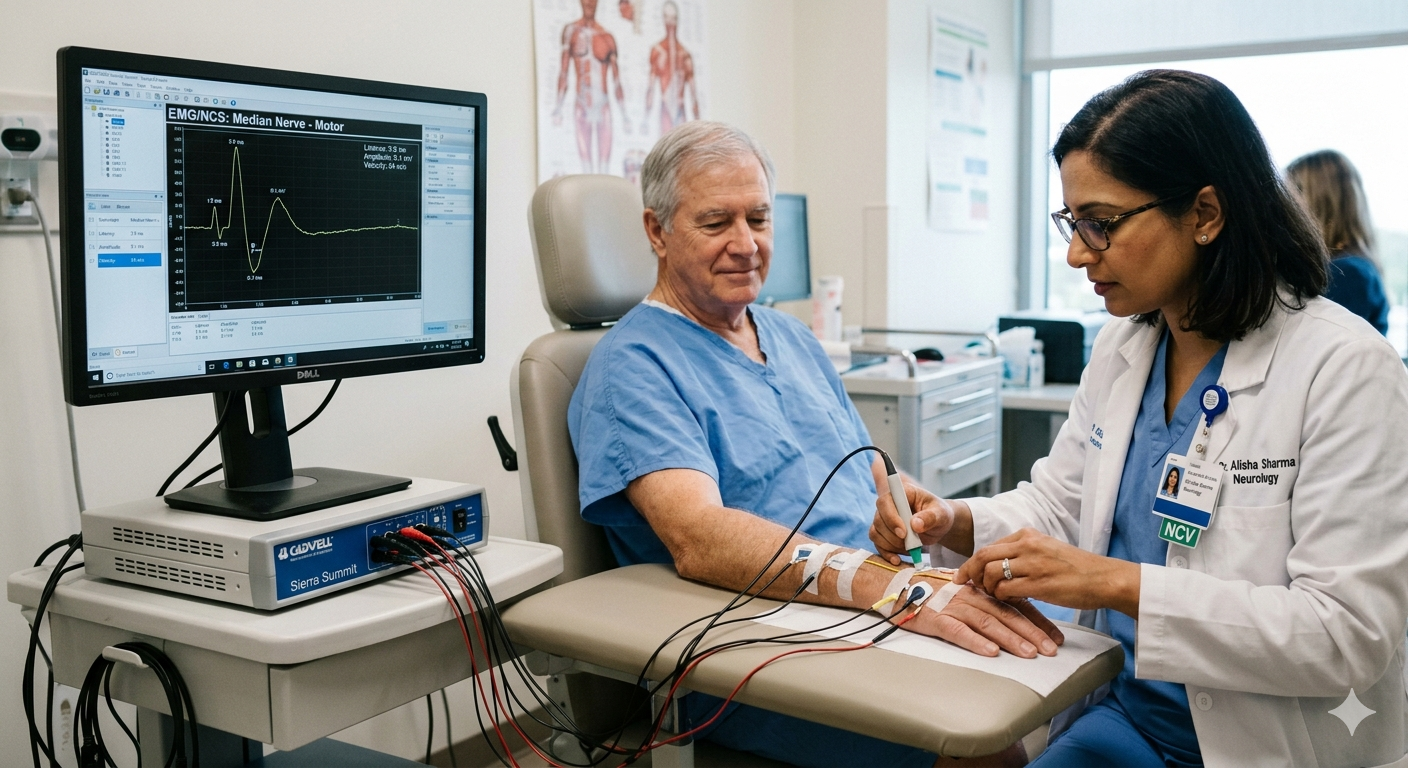
2. Nerve Conduction Studies (NCS)
Nerve Conduction Studies evaluate how quickly electrical signals travel through nerves.
Small electrodes are placed on the skin, and mild electrical impulses stimulate the nerves. The responses are recorded to determine nerve function.
NCS can diagnose:
- Carpal Tunnel Syndrome
- Peripheral Neuropathy
- Nerve Compression Disorders
- Radiculopathy
- Nerve Trauma
- Guillain-Barré Syndrome
This test helps identify whether nerve damage is present and how severe it may be.
Why Choose Specialized Neuro Electrodiagnostic Services?
Specialized neurodiagnostic centers provide:
- Advanced testing technology
- Experienced neurologists and physiatrists
- Comprehensive diagnostic evaluations
- Accurate interpretation of results
- Multidisciplinary rehabilitation support
- Personalized patient care
This integrated approach ensures patients receive timely diagnosis and effective treatment recommendations.